

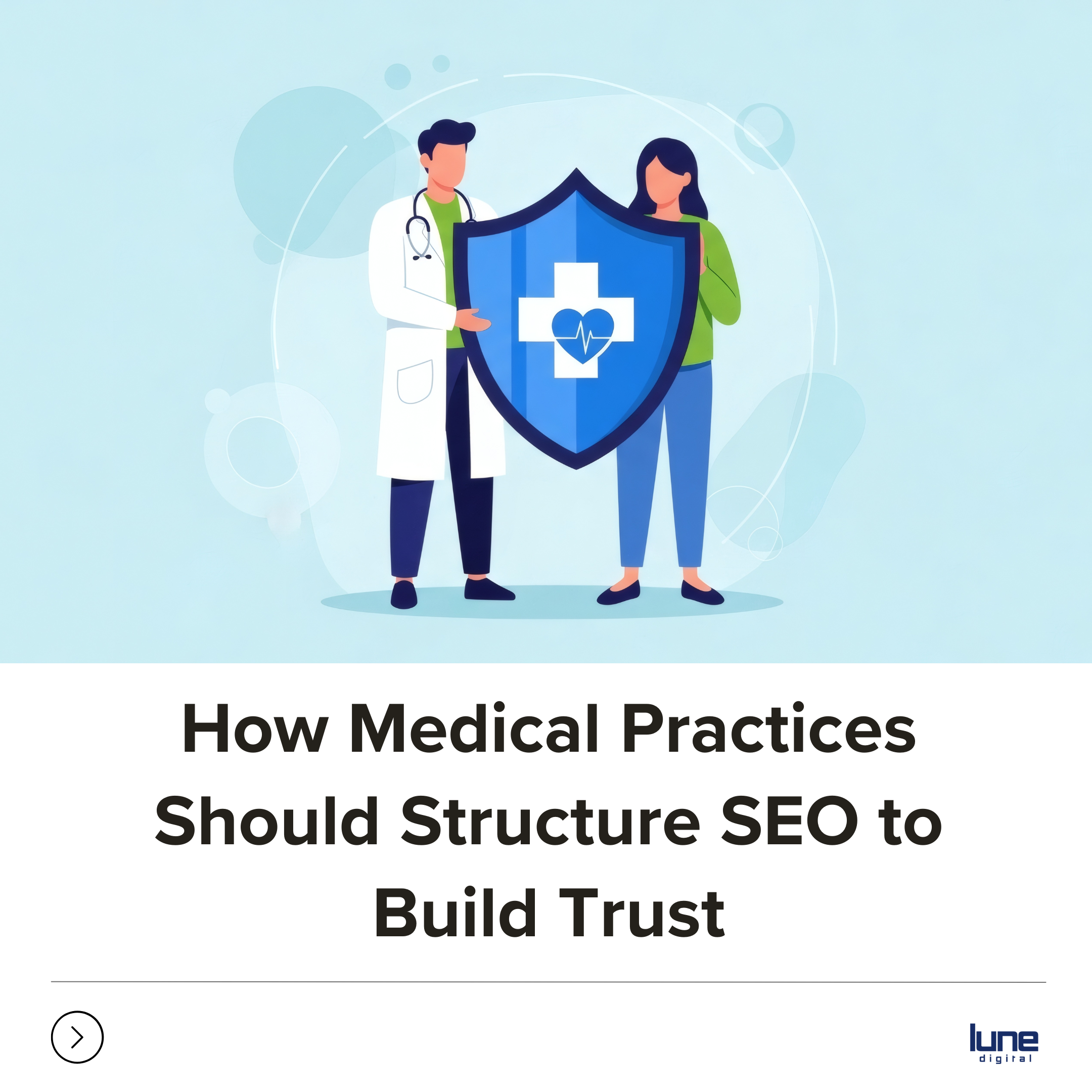
Medical SEO Is About Safety Before Visibility
Medical SEO is not like SEO for other industries.
In healthcare, the risk of getting content wrong is not a lost lead. It can be misinformation, delayed treatment, unnecessary anxiety, or a false sense of reassurance. Patients searching online are often already worried.
Search engines understand this, which is why medical websites are held to higher standards.
In 2026, medical SEO is not about being louder or ranking faster. It is about being accurate, calm, and responsible while still being discoverable.
Trust is not a conversion tactic in healthcare. It is a requirement.
Why Compliance Awareness Matters in Medical SEO
HIPAA is the most recognized compliance requirement in healthcare, but it is not the only responsibility medical websites operate under.
Medical SEO must account for patient privacy, ethical marketing standards, scope of practice, and data handling expectations. This affects how content is written, how forms are structured, how testimonials are used, and how information is framed.
A medical website should never:
- Collect unnecessary sensitive information
- Imply diagnosis or treatment outcomes
- Share identifiable patient details
- Encourage self-diagnosis
Responsible medical SEO signals maturity. Careless SEO erodes trust immediately.
The Real Risk of Writing Medical Content Incorrectly
Medical content is often searched in moments of stress.
Patients may be experiencing symptoms and looking for reassurance or answers. If content is written too confidently, too vaguely, or too aggressively, it can influence decisions in harmful ways.
Search engines evaluate this risk closely.
Responsible medical SEO avoids:
- Absolute or guaranteed language
- Fear-based messaging
- Overly technical explanations without context
- Claims that replace professional care
Instead, it focuses on education, possibility, and next steps.
How Medical SEO and Ethics Align
Good medical SEO and ethical patient care point in the same direction.
Search engines reward:
- Accuracy
- Consistency
- Transparency
- Conservative language
- Evidence of real expertise
Patients respond to the same signals.
This is why medical SEO is not about tricks or tactics. It is about alignment between visibility and responsibility.
Structuring Content for Patients Who Are Worried About Symptoms
People searching for symptoms are rarely calm.
Medical SEO content must acknowledge uncertainty without escalating fear.
Well-structured symptom-related content:
- Explains that symptoms can have multiple causes
- Clarifies when symptoms may require urgent care
- Emphasizes professional evaluation
- Avoids naming diagnoses as conclusions
This helps patients feel guided instead of alarmed.
Educating Without Diagnosing
One of the most important distinctions in medical SEO is education versus diagnosis.
A medical website should explain:
- How conditions are evaluated
- What patients can expect during a visit
- Common factors providers consider
It should not tell patients what they have.
This boundary protects patients and providers while still providing value.
Where Medical SEO Lives on a Website
Medical SEO is not confined to blog posts.
It lives across:
- Homepage clarity and tone
- Service and condition pages
- Provider bios and credentials
- FAQs and patient education
- Privacy and data handling pages
Every page contributes to how trust is perceived.
Trust Signals Are Central to Medical SEO
Patients actively look for reassurance before contacting a practice.
Medical websites should clearly present:
- Provider credentials and licensing
- Professional experience
- Reviews that respect privacy
- Clear contact and scheduling paths
- Calm, professional design
Trust signals should be obvious but not overwhelming.
Brand Signals Beyond the Website
Medical SEO extends beyond on page content.
Search engines evaluate consistency across:
- Google Business Profiles
- Medical directories
- Review platforms
- Public facing information
Inconsistencies reduce confidence.
Clear brand signals reinforce legitimacy.
Backlinks and Authority in Medical SEO
Backlinks matter in healthcare, but quality matters more than quantity.
Search engines favor links from:
- Professional organizations
- Medical directories
- Educational institutions
- Local healthcare networks
Irrelevant or manipulative links damage credibility.
Authority must be earned carefully.
How Proper Medical SEO Improves Outcomes
When medical SEO is structured correctly:
- Patients feel informed, not overwhelmed
- Anxiety is reduced
- Engagement improves
- Trust builds before appointments
- Visibility stabilizes
SEO works best when it supports patient care rather than competing with it.
What People Ask and We Answer
Can medical SEO be done responsibly?
Yes. When content is educational, conservative, and privacy aware, medical SEO supports both trust and visibility.
Is it risky to publish symptom related content?
It can be if written irresponsibly. Proper framing and clear boundaries reduce risk.
Should medical practices avoid SEO because of liability concerns?
No. Avoiding SEO leaves patients to find unreliable information elsewhere. Responsible SEO helps guide patients safely.
The Lune Digital Perspective
At Lune Digital, we believe medical SEO is not a marketing tactic. It is an extension of patient care.
A medical website should:
- Respect privacy
- Avoid diagnosis
- Reduce fear
- Encourage professional evaluation
When SEO is aligned with responsibility, visibility becomes a byproduct of trust.
In healthcare, doing SEO correctly is not optional.
It is part of how patients decide who to trust.
